40 Ways to Save Money on Your Wedding (Free Checklist)
Last updated: November 2026 · Costs from The Knot 2026 Real Weddings Study
The fastest ways to save money on your wedding are to cut the guest list, pick an off-peak date, and choose a venue that includes the basics. Those three moves shrink the venue and catering lines, which together take more than half of the average budget in The Knot’s 2026 Real Weddings Study. Below are 40 ways to save, grouped by category, a quick savings estimator, and a free printable checklist to tick off the ideas you use.
Jump to the free savings checklist ↓
In this guide
The 5 biggest savings at a glance
Small savings add up, but a few choices move far more money than the rest. Here is what the biggest ones are worth at national average prices.
| Change | Typical saving | Based on |
|---|---|---|
| 10 fewer guests | About $2,920 | $292 average cost per guest |
| DJ instead of a live band | About $2,700 | $4,500 band vs. $1,800 DJ |
| No videographer | About $2,300 | $2,300 average videographer |
| No limo or transportation | About $1,100 | $1,100 average transportation |
| No favors | About $480 | $480 average favors |
Wedding savings estimator
Tick the changes you are considering to see roughly how much they could save at average prices. Use your own quotes once you have them.
How much could you save?
Based on The Knot 2026 averages. Nothing is saved or sent.
Guest list and date
- Cut the guest list first. The Knot’s 2026 Real Weddings Study found couples spent about $292 per guest. That makes every name on the list a real cost: ten fewer guests frees up about $2,920 before you change anything else.
- Go adults-only or limit plus-ones. Inviting partners only for married or long-term couples, and keeping kids to immediate family, trims seats without leaving out close friends. Say it clearly on the invitation and the website so nobody is surprised.
- Pick an off-peak month. The Knot considers November through April the off-season, and only about a quarter of weddings fall in those months. Venues with open dates are more likely to lower the price or add extras. Avoid holiday weekends, which can cost as much as peak season.
- Choose a Friday, Sunday or weekday. Saturdays are usually the most expensive day of the week. The Knot’s data shows Tuesday weddings averaging about $20,000, 41% below the national average. Ask every venue for its price by day of the week.
- Plan a morning or brunch reception. The Knot notes that morning weddings are typically the cheapest time of day. Brunch menus cost less than dinner, and guests drink less at noon than at 9 p.m.
- Shorten the reception by an hour. Staff, bar service and music are often priced by the hour. Four hours is plenty for dinner, toasts and dancing.
Venue
- Book a venue that includes the basics. Venue and rentals take about 29% of the average budget, according to The Knot. A place that already has tables, chairs, linens and setup can be cheaper overall than a bare space with a low rental fee.
- Keep the ceremony and reception in one place. You pay one site fee, skip transportation between locations, and avoid a long gap that guests have to fill.
- Look at parks, gardens and community halls. Public gardens, community centers, libraries and family land often cost far less than event venues. Check the permit rules, noise limits and what you must rent.
- Ask about open or last-minute dates. Venues would rather fill an empty date than leave it open. If your date is flexible, ask what is still available in the next six to nine months.
- Compare the full total, not the headline price. Ask every venue and caterer for a written total that includes service charges, tax, required staff and minimum spends. The cheapest quote on paper is not always the cheapest total.
Food and drinks
- Get quotes for buffet, family-style and stations. Catering, cake and drinks take about 24% of the average budget. Prices for each serving style depend on the caterer, so ask for all three and compare.
- Choose a seasonal, local menu. Dishes built on what is in season are usually cheaper and taste better. Ask your caterer which menu items cost the least that month.
- Limit the bar. Beer, wine and one signature cocktail cover most guests. A full open bar for five hours is one of the easiest lines to trim.
- Skip the champagne toast. Let guests toast with whatever is already in their glass. Nobody notices, and you skip a bottle for every few guests.
- Serve a small display cake and a sheet cake. The Knot puts the average wedding cake at $540. A small decorated cake for the cutting, plus a plain sheet cake served from the kitchen, keeps the moment for less.
- Drop the late-night snack or extra desserts. Most guests are full after dinner and cake. Add a late snack only if the party runs long.
- Ask about bringing your own alcohol. Some venues allow it for a corkage fee. Compare that fee with the bar package before you decide.
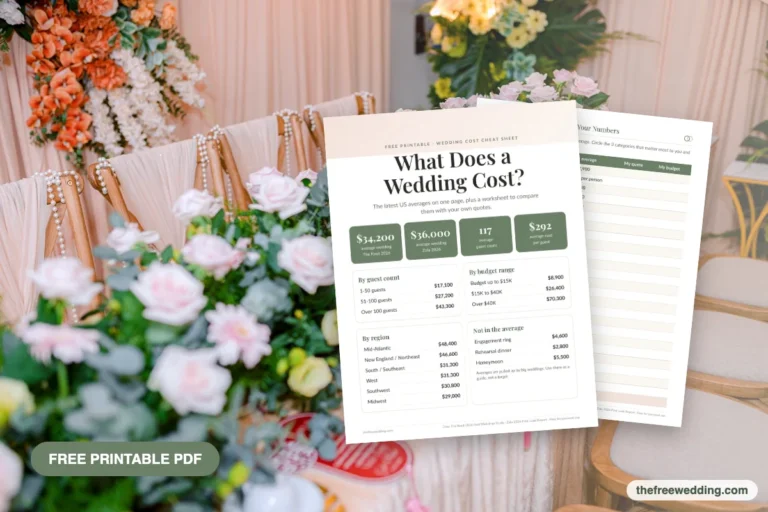
Not sure how much your food budget should be? See how the average cost of a wedding breaks down by category and state.
Attire and beauty
- Buy a sample, secondhand or rental dress. The Knot reports an average of $2,100 for the wedding dress. Sample sales, resale sites and rentals offer the same styles for less.
- Shop non-bridal collections in white. Bridesmaid, evening and occasion lines in white or ivory often cost a fraction of a bridal gown.
- Rent the suit or tux. Or buy a suit you will wear again and skip the rental altogether.
- Let the wedding party choose their outfits. Give a color palette and let each person pick something they like and can afford.
- Book hair and makeup only for yourself. Hair and makeup each average about $150 per person, according to The Knot. Let the wedding party do their own or book their own artist.
Flowers and decor
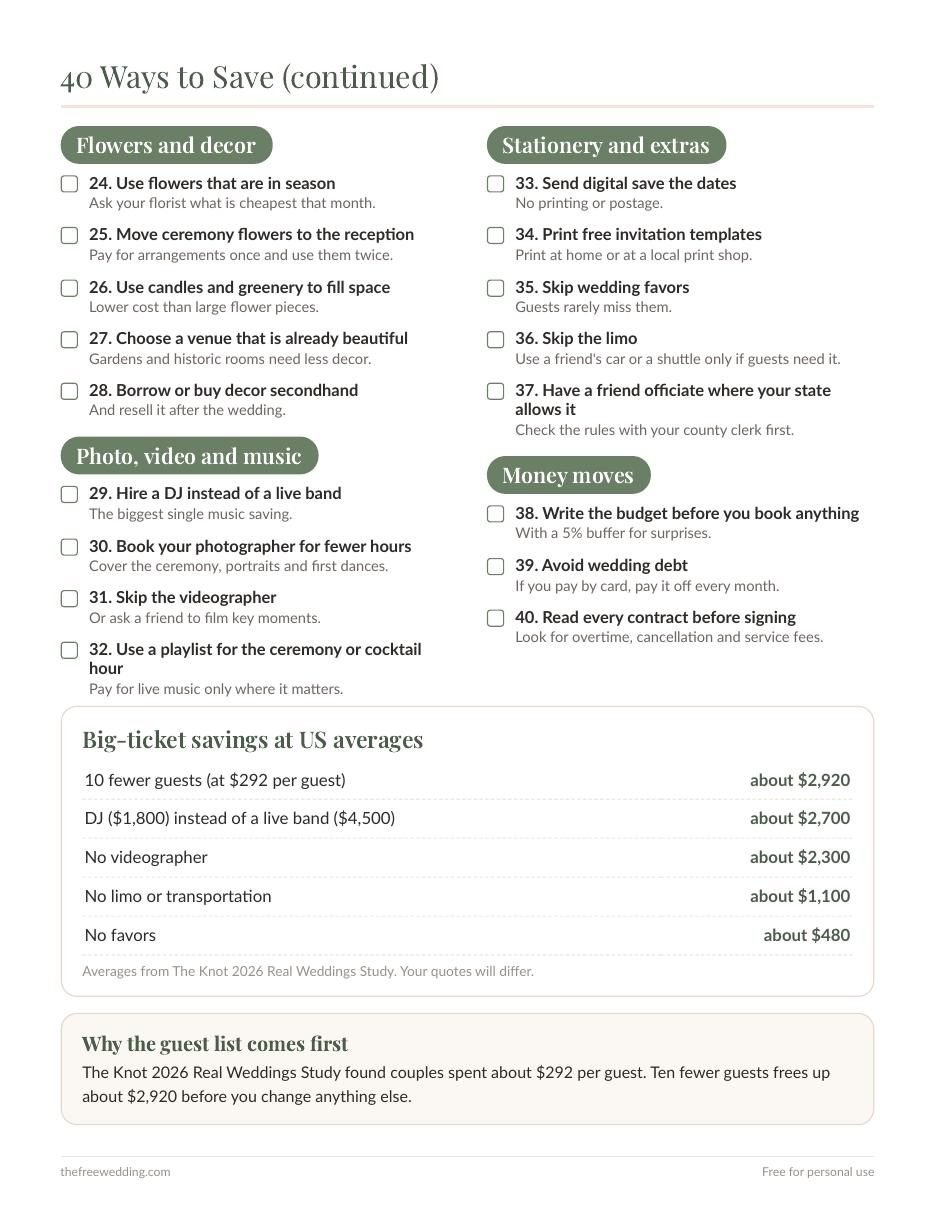
- Use flowers that are in season. Florists pay less for what is in season, and so do you. Tell your florist your colors and budget and let them suggest flowers.
- Move ceremony flowers to the reception. Aisle pieces and arch flowers can become reception decor. Ask a friend or your coordinator to move them during cocktail hour.
- Use candles and greenery to fill space. Greenery runners and groups of candles fill long tables for less than large flower centerpieces. Check the venue’s candle rules first.
- Choose a venue that is already beautiful. Gardens, barns with string lights and historic rooms need much less decor than a blank ballroom.
- Borrow or buy decor secondhand. Local resale groups are full of signs, vases and lights from past weddings. Resell yours afterward to get some money back.
Photo, video and music
- Hire a DJ instead of a live band. The Knot puts the average reception band at $4,500 and the average DJ at $1,800, a difference of about $2,700.
- Book your photographer for fewer hours. Focus coverage on the ceremony, family portraits and the first dances. Getting-ready photos and the last hour of dancing are the easiest hours to drop.
- Skip the videographer. The average videographer costs about $2,300, according to The Knot. A friend filming the vows and toasts on a phone can capture what matters most.
- Use a playlist for the ceremony or cocktail hour. Pay for live music only where it matters most to you, and use a well-made playlist for the rest.
Stationery and extras
- Send digital save the dates. An email or text save the date costs nothing to print or mail.
- Print free invitation templates. Couples spent about $510 on invitations and stationery on average, according to The Knot. Free printable templates printed at home or at a local print shop cost far less.
- Skip wedding favors. The average spend on favors is about $480. Many guests leave them on the table.
- Skip the limo. The Knot puts average transportation at $1,100. Borrow a friend’s nice car, or book a shuttle only if guests need a ride.
- Have a friend officiate where your state allows it. Officiant rules differ by state and county, so check with the clerk’s office where you will marry before you plan on it.
Money moves
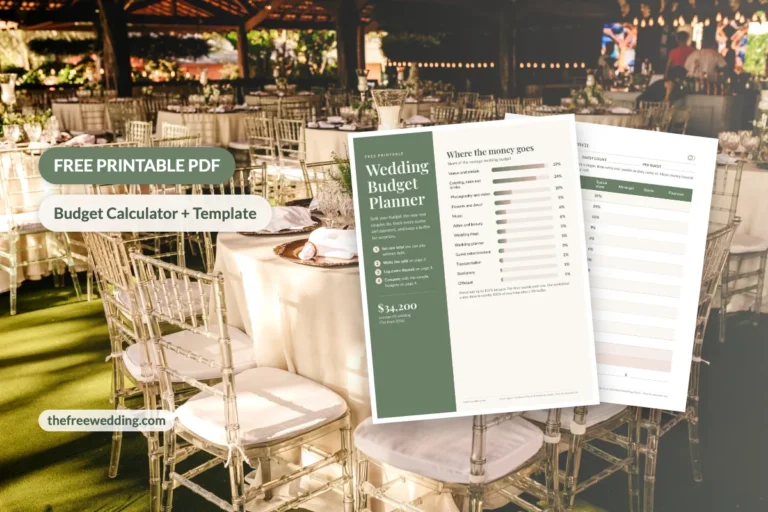
- Write the budget before you book anything. Set one total and keep at least 5% as a buffer. Our wedding budget breakdown and calculator shows how to split it by category.
- Avoid wedding debt. Plan around money you have or will save before the date. If you pay by card for rewards, pay the full balance every month so interest does not cancel out your savings.
- Read every contract before signing. Look for overtime rates, cancellation terms, service charges and what happens if the vendor cancels. Ask questions before you sign, not after.
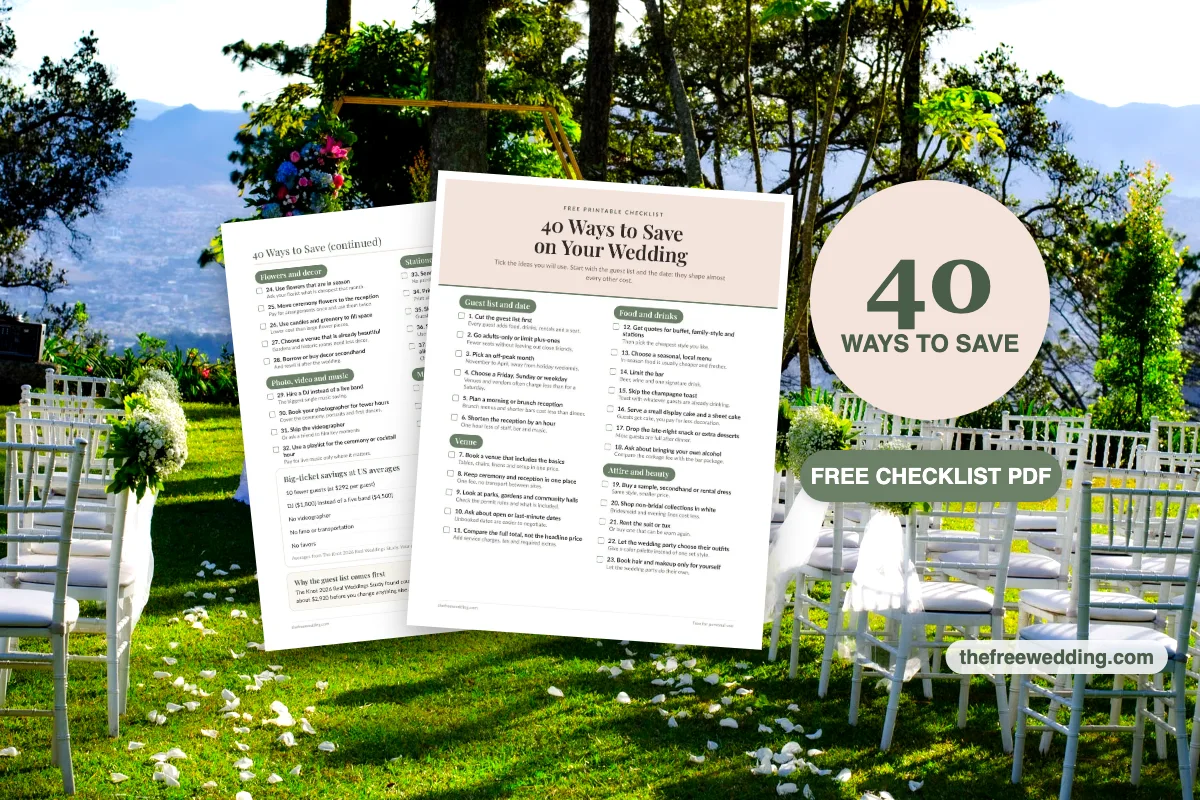
Download your free wedding savings checklist
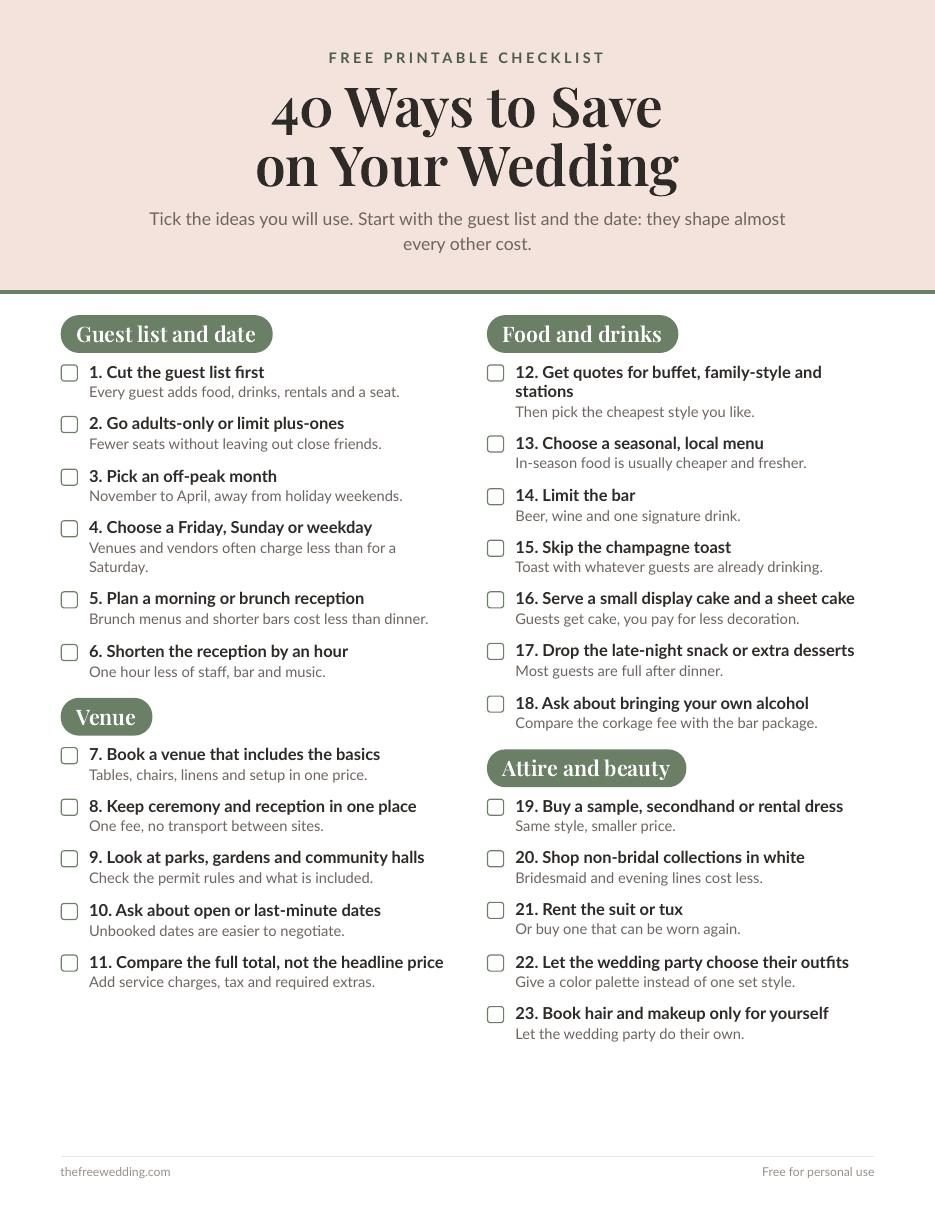
- All 40 ideas with tick boxes, grouped by category
- Big-ticket savings at US average prices
- Savings tracker to log quotes and what you saved
Frequently asked questions
What is the best way to save money on a wedding?
Cut the guest list. The Knot’s 2026 study found couples spent about $292 per guest, so every ten guests you remove frees up about $2,920 for food, drinks, rentals and seating.
What is the cheapest day to get married?
Weekdays. Saturdays are usually the most expensive day, and The Knot’s data shows Tuesday weddings averaging about $20,000, 41% below the national average.
What is the cheapest month to get married?
Off-peak months from November to April usually cost less, because only about a quarter of weddings take place then. Holiday weekends in December can still be pricey, so compare quotes.
Is a DJ cheaper than a band?
Usually. The Knot puts the average reception band at $4,500 and the average DJ at $1,800, a difference of about $2,700.
How much should I keep as a buffer?
The Knot suggests at least 5% of your budget for unforeseen costs, plus at least $800 for vendor tips.
Is the savings checklist really free?
Yes. It is a 3-page US Letter PDF with all 40 ideas, big-ticket savings and a savings tracker. No email or sign-up needed.
Next step: set your total with the wedding budget calculator, then follow the wedding planning checklist to book vendors in the right order. More ideas in our budget wedding guides.
Sources: The Knot: average wedding cost (2026 Real Weddings Study); The Knot: wedding budget breakdown; The Knot: wedding off-season; The Knot: cheapest days to get married. Savings figures are our math based on these averages.